Alternate Styles:
Purple Chain
Aggressive NGPC
NeoGeo Pocket Color
The NeoGeo Pocket Color (NGPC) is a 16-Bit handheld colour gaming system developed by SNK (Shin-Nihon Kikaku) that was in retail for the brief period of August 6, 1999 to April 15, 2000. It was designed to be a direct competitor to the Game Boy Color (GBC) but its ill fate was largely due to the bankruptcy of SNK.
Although technically superior to the GBC, the classy console sported some unique features like a calendar and horoscope not seen before on a handheld and with a lower price for investment, the brief time it was on sale never garnered much attention from the main market.
Unfortunately this was very bad for SNK. In a time when their image was looking outdated, the state of their finances, coupled with some bad management and the Pokemon craze meant the system did not get the exposure it needed nor did it spark any kind of major battle for the handheld market and ultimately became SNK's last console.

HISTORY
The history of the NGPC is tied to the misfortunes of SNK itself that described in a summarised way does not do the company and moreover the console justice.
Sometime prior, SNK concluded it had an opportunity to take a share of the handheld market which was totally dominated by Nintendo much more so than today. The ageing 8-Bit Game Boy was almost 10 years old at this time.
The first iteration of SNK's handheld was the NeoGeo Pocket (NGP) - a monochrome handheld. This version of the hardware never made it outside of Japan and Hong Kong where sales were slow but there had been some significant game releases.
In total only 10 games were released.
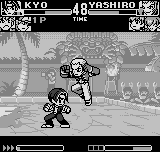
King of the Fighters R-1 (Mono)
Nintendo released the (then) new Game Boy Colour (GBC) and SNKs competitor system quickly looked dated. The solution was to literally add colour to it. The new 'color' version would play all the monochrome games appeasing all those who had invested in the monochrome version.
For fans of SNK (who had a cult following in the arcade and home) it was a much welcomed-for piece of kit. The chance to play SNK's games in a handheld fashion was something always thought of or perhaps dreamed of.
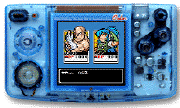
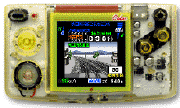
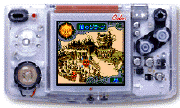
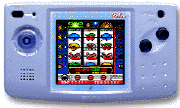
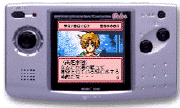
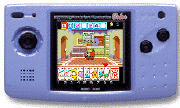
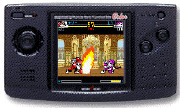
The NeoGeo Pocket Color console was originally released in March 1999 in 8 different colours (6 initially) and became available worldwide.
 |
 |
 |
 |
 |
 |
 |
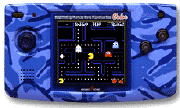 |
The specifications were impressive, comparable to a Mega Drive/Genesis, meaning that ports of NeoGeo games (stalwarts of the 2D/16-Bit era) could be done without sacrificing the gameplay too much. In addition a much improved method of control using a micro-stick D-Pad was used. Coupled with that the superb quality of the screen and the longevity of 40 hours from a set of batteries the unit was something a revolution in a handheld.
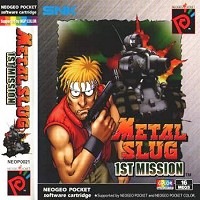
Software was equally impressive and undeniably of very high quality. Games like Metal Slug and King of the Fighters, although basic in their presentation were all as much playable as their big-daddy NeoGeo counterparts. Other games such as Fatal Fury and Samurai Spirits (Samurai Showdown) had their graphics redrawn to make them standout on the small screen.
The price of the unit was lower and software prices ranged from £10 to £25 and even the packaging was superior with very sturdy cases.
Market Performace
In Japan it was released in March 1999 and never sold well after the short time between the releases of the mono version and the introduction of the Wonderswan - a competing handheld from Bandai.
In the US the system was released in June but actually launched in August of 1999(!) for a price of $69.95. After the Barone Family whom were the head of western SNK offices were stripped of their control of the US offices (for generally being crap) a major campaign for the Christmas of 1999 improved sales of the system through it being on sale in major retail stores such as Toys R Us and being advertised on TV.
Some games did not see releases in all regions thus impacting the software catalogue and as such games such as Cotton and Faselei are sought after.
In Europe the system became somewhat successful in the UK. It was initially on sale for the price of £60 even having its own section in stores of GAME and advertised in gaming magazines but this was very short lived.
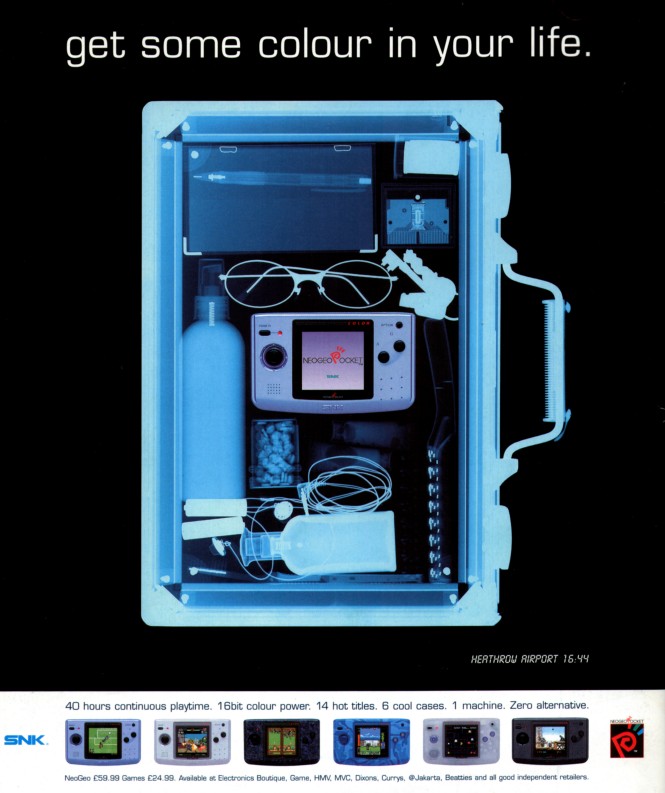

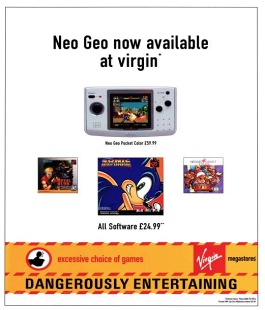
UK Magazine Adverts (1999)
In June 2000 Aruze, the holding company of SNK, announced it was closing all of its US and European offices and thus the system was dropped deemed to be a commercial failure. The result of the Aruze buy out was the remaining stock purchased back for reselling in Asian (Japan) markets where support for the system would continue.
Later the recalled stock from the US appeared in packages that typically included 6 games without their packaging (cases) or 4 games without a console in blister packs. These can still be found today.
SNK then had a turbulent few years to say the least. Aruze (a producer of Pachinko machines) did little to support SNK's video game business. It developed Pachi-Slot machines based upon popular SNK franchises. The original founder Eikichi Kawasaki left the company, along with other executives, to found the entertainment company Brezzasoft.
2001 saw the company filing for bankruptcy and selling the intellectual property rights for most of the SNK franchises to BrezzaSoft and SNK Corporation officially ceased to be.
In 2002 Eikichi Kawasaki founded a new holding company by the name of Playmore and reacquires SNK's property. A year later Eikichi Kawasaki finally reacquires the name "SNK" and the company name is then changed from Playmore Corp. to SNK Playmore Corp. They continue to develop games for modern systems and the arcades.
Summary/Round Up
Overall it's difficult to see where (and when) the system really had a chance. There were probably two main reasons whilst the NGPC never took off. Whilst technically superior and prices much easier on the wallet, the software catalogue was not big enough to attract enough gamers regardless of the high-quality. SNK was a very cult market; more about the hardcore than the kids- the main component of the handheld market. SNK had a cult following thanks to its successes mostly in the arcades. The NeoGeo [consoles] had historically proved too expensive to become massively popular against the likes of the Mega Drive and the SNES. Compared to the Game Boy brand (which had sold some 80 million units) it was unknown and the explosion of Pokemon kept it so.

The Classic NeoGeo Logo
Company issues were the other major factor. The Barone family, heads of SNK in the US and Europe, known for their poor organisation did little to develop relationships with third party developers - a critical component to the success of any console history has shown. Whilst there was attempts to later rectify these problems the bankruptcy halted the improvements.
Today, the NGPC has a cult following created mainly around the high quality of software produced. This also includes those who either do not want to be seen playing a Game Boy, fans of SNK or both.
Availability is good but waning. Hardware prices are relatively low and It still regularly appears in the windows of Gamestation (in the UK at least) with some great package deals for around £30. Software prices vary somewhat as titles are more collectible than others particularly if complete with case and manual.
The average gamer would find it tricky to locate some of the better games outside of Ebay (which usually have a good selection) unless they know of more specialist places. Places such as Play-Asia still have games available to buy.
HARDWARE OVERVIEW
Overall the unit is robust and very neat. It is fairly light and sturdy and will withstand a good few bumps should they happen. It is held horizontally and fits very well in the hand.
The physical dimensions are Height 80mm x Width 130mm x Depth 28mm. There was a slimmer version released that was 125 x 73 x 27mm, some 13% smaller than the original. There are very small holes in the bottom-right corner of the unit for attaching a strap.
The screen is impressive especially so for the time. It is a 146 colour (almost triple that of the GBC) reflective TFT screen liquid crystal display measuring 68mm wide / 2.7 inches. Although you need to be near a light source the display is extremely sharp and bright.
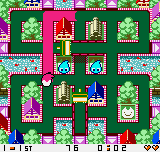
Instead of a usual D-Pad controller, the NGPC has a micro stick which allows for less rigid controlling. It also makes a satisfying click sound when used. Some games such as Crush Roller (essentially a Pac-Man Clone) came with a joystick adaptor which fit on the stick which helped with more sharper angles for ease of play. There are 2 main buttons for gameplay: Button A and Button B with an Option button which usually acts as a pause in most games.
Cartridges fit snugly into the back with no risk of them falling out and there are no protrusions.
The Ext port is a serial port that allows for link-up for multi-gaming with other NGPC's and connection to the SEGA Dreamcast.
Sound from the internal speaker is very clear. There is a standard 3.5mm stereo headphone socket with adjustable volume which gives superb clarity but there is a slight noise that can be heard from the internal workings of the unit with expensive headphones but most people probably would not notice.
When the battery life is near empty the power light will flash and a warning to that effect will appear on screen. An adaptor can be used if you want to save on batteries.
Most games will have battery backup and a standard CR2032 (or CMOS battery or Coin Cell) is also used for storing saves called a Sub-Battery. When low a warning will appear on screen.
CPU |
Toshiba TLCS900H 16-Bit @ 6.144 MHz |
RAM |
12K for 900H |
ROM |
64kbit Boot ROM |
RESOLUTION |
160x152 |
COLOURS |
16 Palettes per plane, 48 palettes |
SPRITES |
64 sprites per frame |
SCROLLING |
2 scrolling planes |
SOUND |
Z80 @ 3.072 MHz |
COMMS |
Serial Input/Output (SIO) 1 Channel 19200 bps, 5-Pin port |
STORAGE |
ROM Cartridge 16-Mbit (2MB) Max with 4-16Mbit flash memory |
POWER |
20 Hours with 2 x AA Batteries |
Boot ROM
When powered on the boot ROM displays an animated intro to form the NeoGeo Pocket Color logo with a jingle. This appears whether a game is inserted or not but can be skipped by pressing Button B.
With no game inserted the system will go to the Pocket Menu. From here the built in functions can be accessed. These are:
Calendar - The most simple of calendars.
World Time - Select the time out of 12 world locations relative to your current time.
Alarm - Set an alarm. The unit will beep with the logo on the screen with a little critter dancing on the bottom.
Horoscope - After inputting your date of birth you will be given a goofy little report based on Money, Health, Romance and General. Each will be ranked out of 5 stars.
Setting - takes you through setting standard system options. They are:
Language: English or Japanese
Set color for mono games: black and white, red, green, blue, classic
Set date and time. (The current time is displayed in the bottom right)
Accessories
Some official accessories were available for a short period of time.
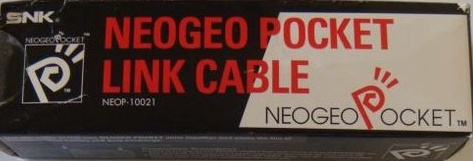
Link Up Lead - connect x2 units together for multi-player games.
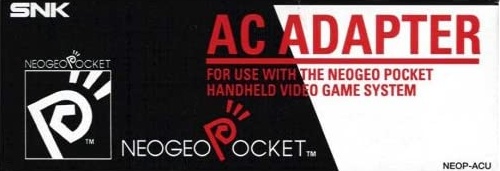
DC Adaptor - play the unit from the mains. Some 3rd party/compatible ones were also available.
Dreamcast Link-Up Lead - For compatibility with games on SEGA's console. Several fighting games utilised this connectivity. It's now a rather rare item. See Games Library Overview for more info.
Carry case - with the NGPC logo embodied in.
Hand Strap - for hooking your unit around your wrist.
Wireless Link Device - only available in Japan. It allowed multi-play wirelessly.
Flash Kit (unofficial) - whilst not an official device it did allow for the flashing of ROMs from a PC. It was widely used in the efforts to create homebrew games.
Worm Light (unofficial) - Adds light to the screen when playing in dark conditions. Quite rare.
An MP3 player was planned but never released due to the withdraw of the console.

GAMES LIBRARY OVERVIEW
A commonly stated reason for the love for the console lies in the high standard of games for the system.
Whilst the games library was relatively small those that ventured usually found AAA quality titles some of which were quite unique. There were games of multiple genres: action, sport, RPG and shooters as well as many one-on-one beat 'em ups and puzzlers.
Reviews at the time were very favourable indeed praising many games for the depth of gameplay even though they were handheld titles.
As a sidenote, the packaging for the games was excellent. Cartridges came in rigid plastic cases akin to the big daddy NeoGeo cartridges that cost hundreds (in any currency) and then a separate plastic case for the cartridge along with any adaptors that were needed. Later the main plastic case was replaced with card versions much to the anger of the Japanese heads at SNK!
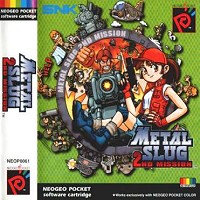
All mono games (NGP) work on the colour console and about 98% of the colour software works on the mono console with most having a save feature. There is no region lock-out so games that are not text intensive can be imported (unless you can read Japanese of course).
FIRST SERVED
The majority of games on the NGPC were from SNK and they were praised for their superb quality. There were original games based upon the big name franchisees such as King of the Fighters, Metal Slug and Samurai Showdown. For those beat em' ups, the unique style of the D-Pad benefited players with more precise controls.
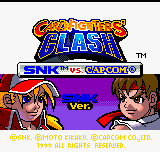
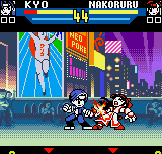
SNK Vs Capcom: Match of the Millennium featured a massive 26 fighters to brawl with and the classic gameplay (for which made the title) was perfectly intact. SNK Vs Capcom: Card Fighters Clash is sometimes cited as the killer app the machine could have had. Players had to collect cards with characters from both companies' games to build decks and play them. Cards could be attack cards, defend cards or action cards. This was often described as simple and highly addictive but became a massively overlooked title.
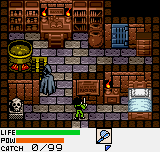
Dark Arms was an action game confused for an RPG for being presented in the vein of Zelda. Set in a world of spooky horror players must negotiate mazes, crypts, vaults, haunted villages and scary circuses in order to reveal the true intention of The Master.
THIRD PARTIES
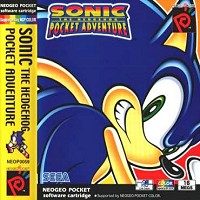

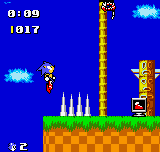
SNK tried to encourage third party developers to make games but few were interested because of the small user base. As part of an alliance with SEGA, Sonic The Hedgehog: Pocket Adventure was released and marked the second time Sonic appeared on a non-SEGA console. It was an original adventure easily the best handheld Sonic game (at the time) and not a straight port of a Mega Drive title though it can be described as a medley of elements from all the Sonic games (mostly Sonic 2). Check out the feature to the game for more info.
Another part of this alliance was the marriage between the NGPC and the Dreamcast console via Link-Up. Games that featured this option include King of Fighters R-2 (links with King of Fighters '99 Dream Match and King of Fighters Evolution), SNK vs Capcom: Match of the Millennium (links with Capcom vs SNK 2), SNK vs Capcom: Card Fighters' Clash (links with King of Fighters Evolution), SNK vs Capcom: Card Fighters' Clash Expand Edition (links with Capcom vs SNK 2) and Cool Cool Jam (links with Cool Cool Toon). The link (usually) meant that players could build up their characters stats on the portable game and then upload them to the Dreamcast and continue playing. Unfortunately very few gamers took advantage of this feature.
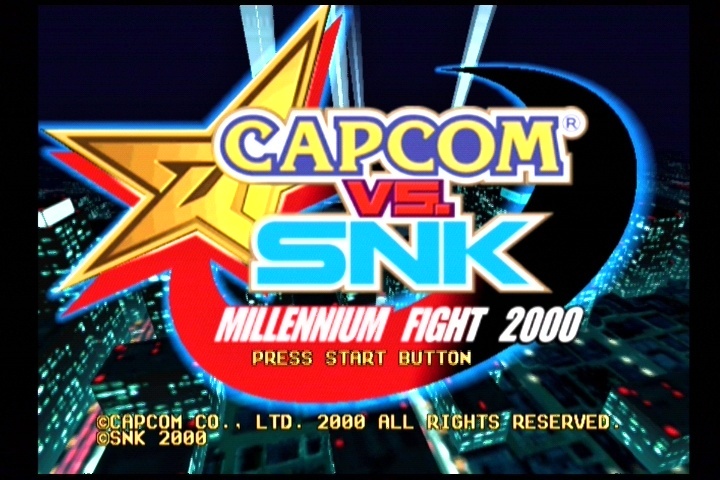
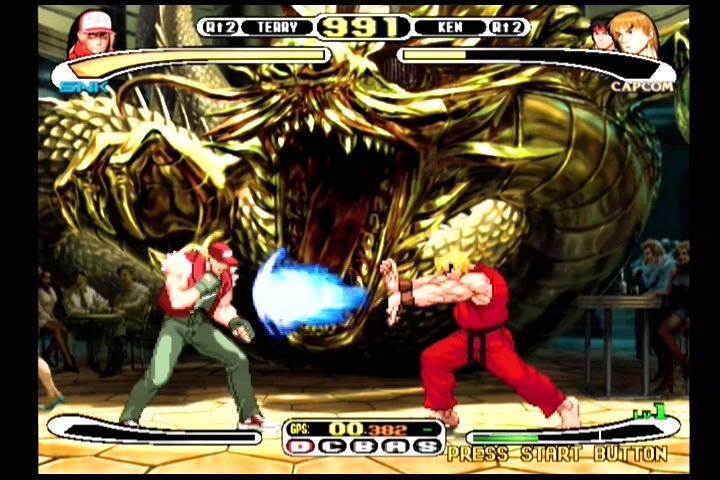
Capcom Vs SNK (Dreamcast)
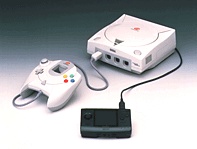
NGCP Linked to a SEGA Dreamcast
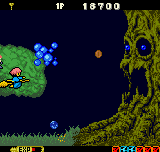
From Success came a version of the 2D shooter series Cotton (Fantastic Night Dreams). Whilst not as frantic as the larger console versions fans still appreciated the addition to the series as it recreated the gameplay well. It was also a good title for beginners of the genre.
Because of the limited availability some titles were rare and have become highly collectible such as the much lorded tactical (turn based combat) game Faselei! from Sacnoth, one of the most technically impressive games was never released in the US making the European version the only English translation.
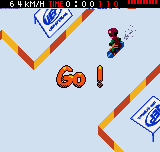
Sports games are a plenty with Neo Turf Masters, Baseball Stars and Cool Borders to name but a few. Equally puzzle games with Shanghai Mini (Mah Jong) and a pocket version of Puzzle Bobble Mini (Bust A Move).
If investigating the software library and it should seem the amount of official games is limiting then there are plenty of public ROMS available.
For new development there is a website dedicated to developing homebrew games.
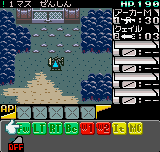
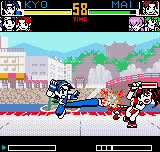
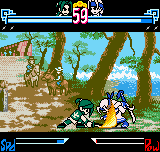
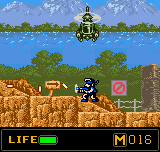
GAMES GALLERY
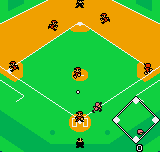
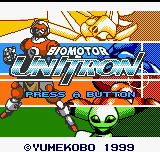
A selection of some of the games on the system.
 |
 |
 |
 |
Baseball Stars |
Biomotor Unitron |
Capcom Vs SNK: Card Fighters Clash |
Cool Borders Pocket |
 |
 |
 |
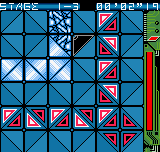 |
Cotton |
Crush Roller |
Dark Arms |
Delta Warp |
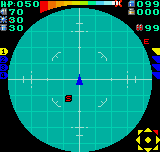 |
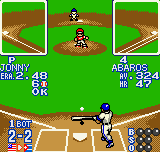 |
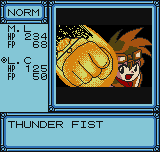 |
 |
Dive Alert (Burn Version) |
Dynamite Slugger |
Evolution |
Faselei |
 |
 |
 |
 |
King of The Fighters R2 |
Last Blade |
Metal Slug First Mission |
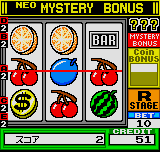
Neo Mystery Bonus |
 |
 |
 |
 |
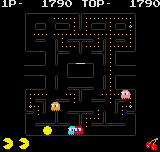
Pac Man |
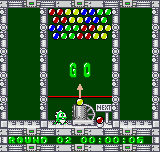
Puzzle Bobble Mini |
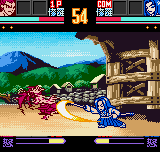
Samurai Showdown |
SNK Vs Capcom - Match Of The Millenium |
 |
|||
Round Up/Personal Comments
The NGPC is a superb console and was ahead of its time. For me it was everything that I wanted in a handheld. To play some of SNK's great games in the comfort of a handheld is great and coupled with the long battery life is an added bonus. It feels much better in the hands too. I always felt the GB was cramped.
The dimness of the Game Boy screen (or GBC for that matter) always put me off I'm pretty sure the audio quality is better than the Game Boy Advance! The quality of the display on the NGCP still impresses as it is still better than the 1st gen Game Boy Advance and DS! Luckily I invested when it was more easily available with a few games. To this day, I have never read or heard anything bad about the NGPC.
The image of having a NGPC was somewhat less child-like too. Sitting in the office with a Game Boy makes you look like a kid! I did loose it for several months at one point as a friend borrowed it and didn't want to give it back! He did later get one for him and his girlfriend.
I have a Game Boy Advance and DS but my NGPC is my favourite because it is not one of them (if that makes sense) liking to break from the norm. It comes highly recommended especially if you want to stand out from the crowd but keep in mind getting the games can be tricky.
LINKS
NeoGeoPocketPower
A website dedicated to the handheld with reviews, cheats and comments from other users.
NGPC @ Vidgame.net
Summary information and some photographs.
http://www.vidgame.net/SNK/NGPC.html
NGPC @ Handheld Classics
A superb article describing the machine in detail.
http://www.pocketgamer.co.uk/r/Various/Handheld+Classics/feature.asp?c=6536
NeoGeoPocket Devr's
A website with plenty of information regarding the development for the NGPC. There are plenty of demo's and applications to download.
Neo-Geo.com
For all things NeoGeo. Still has active forums and master lists for NGPC.
History of SNK @ Gamespot
A brilliantly detailed article about the history of SNK.
http://uk.gamespot.com/features/the-history-of-snk-6089278/
SNK Playmore Official Website (US)
http://www.snkplaymoreusa.com/
SNK Playmore Official Website (Jap)
EMULATION
Emulation of the NGPC is technically incomplete though there are several for various platforms that can play commercial games fairly well though all have some compatibility issues. Some of the more popular are detailed below.
PC emulators require a Pentium 3 class CPU for full speed with Windows emulators requiring DirectX. These have not seen much development in recent years.
An emulator has recently been released for Android based smartphones and there is one for Nintendo Wii.
Neo Pop
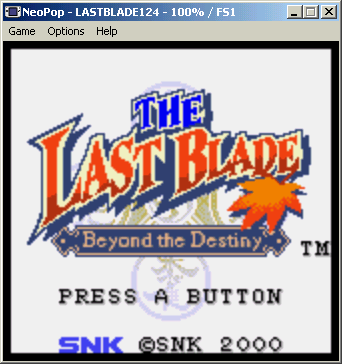
Probably the best Windows emulator that has been ported to other platforms.
A Dreamcast version can be downloaded from http://www.dcemulation.com/dcemu-neopocett.htm
Koyote
A reasonably complete emulator with many more options such as those related to graphics processing. Some versions do not offer sound. It also includes some preliminary support for Netplay.
You can download this from http://www.zophar.net/ngpocket/koyote.html
Neo Pocott
A now discontinued emulator. It has less compatibility but covers all the basics. It is available on numerous platforms including Apple Mac, Linux and Dreamcast.
Homepage: http://neopocott.emuunlim.com/
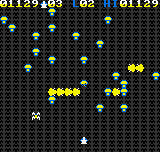
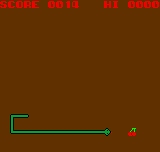
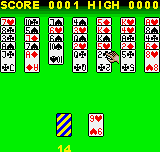
There are also plenty of public domain ROMs to be found many of them consisting of technical demons such as movie players or 3D animations but there are plenty of games. Here is a small selection.
 |
 |
 |
 |
Invader (Part of a compilation of games) |
Neo Centipede |
Snake |
Theives |
MISC INFO
- The console is called "Color" in all regions even though in Europe we spell it "Colour".
- A version of SNK Vs Capcom Card Fighters was released for the Nintendo DS in 2007.
Related:
Sonic Pocket Adventure Feature


